Best Ski Jackets of 2026: What Actually Holds Up
The ski jackets worth buying in 2026, from budget through to premium, across men's and women's. UK pricing and full specs.
You can now buy a ski jacket with a 20,000mm waterproof rating, fully taped seams, a helmet-compatible hood and a PFAS-free water repellent treatment for around £200. That this is true in 2026 tells you most of what you need to know about how the market has moved. Specifications that used to define premium territory have travelled down the price stack, and the most interesting jackets are no longer at the top.
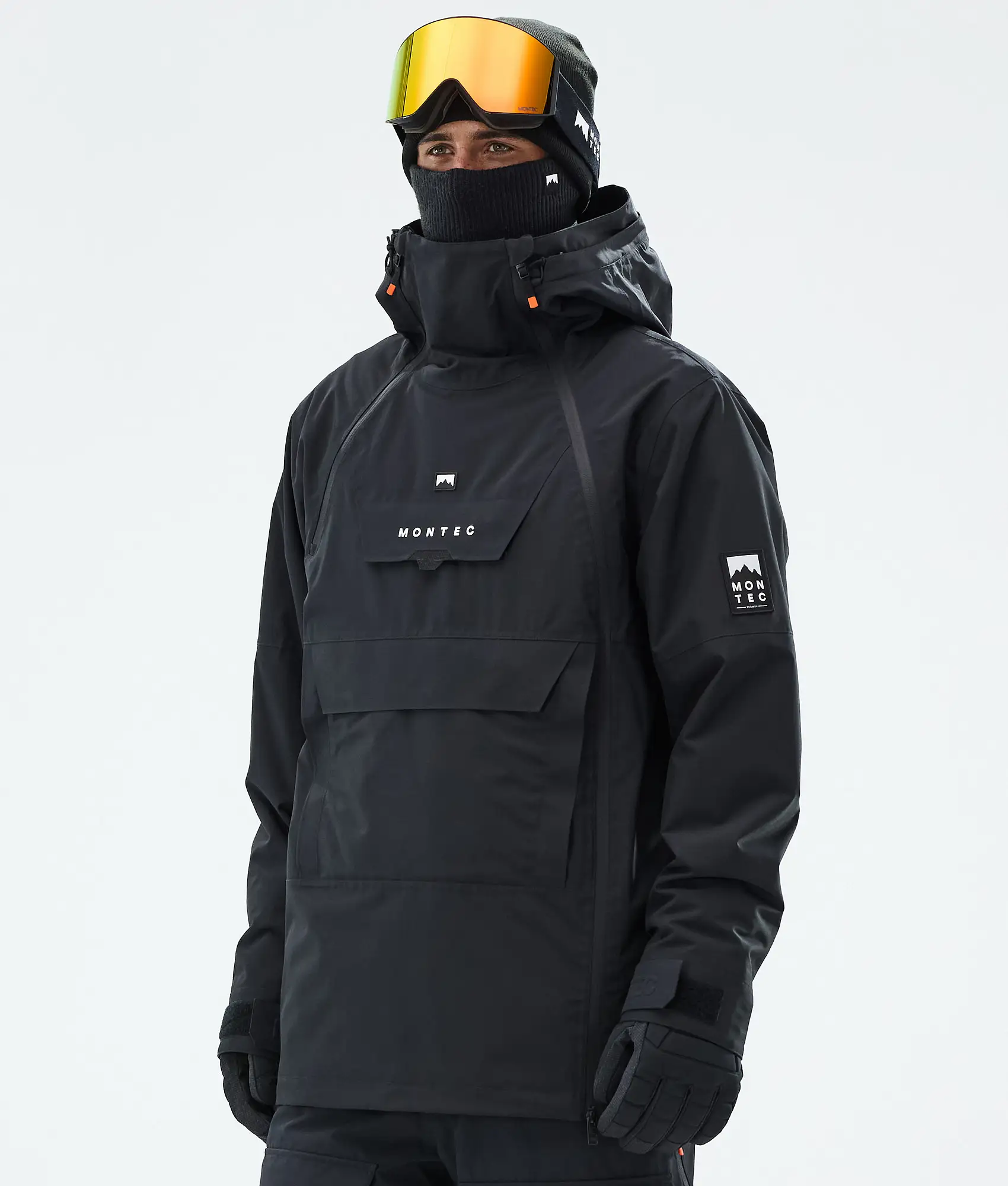
Montec Doom: men’s, the value benchmark
The Doom runs a bonded 20,000mm waterproof-breathable membrane with fully taped seams and a PFAS-free DWR, which is a spec sheet more commonly seen on jackets well above £218. The deep storm-guard hood adjusts front and rear and clears a ski helmet without bunching, the zipped underarm vents move air properly when you actually open them, and the non-slip snow skirt closes with a button that engages rather than dangling for show. The Doom earns its place at the top of the value band through the details.
The insulated variant runs 60g in the body, 40g in the sleeves, which keeps the warmth on the lighter side of resort outerwear and lets the jacket travel into spring without forcing you to overheat. A lined shell version exists too, for skiers who run hot or who would rather layer their own synthetic underneath.
RRP £218 across colourways. See the Doom in Black. Brand background in our Montec profile.
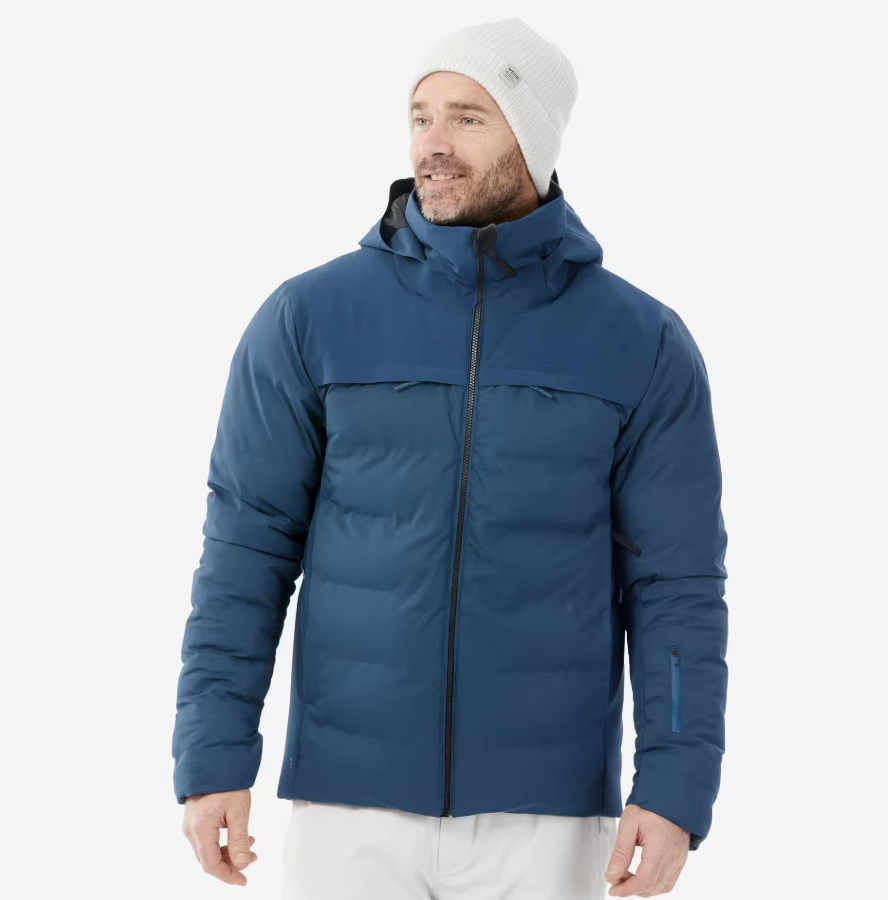
Decathlon Wedze 500 Warm: the entry-level pick
At £109.99 RRP, the WEDZE 500 Warm is the entry-level pick in this shortlist rather than Decathlon’s cheapest ski jacket. The live PDP lists a 15,000mm waterproof rating, synthetic insulation for warmth, a snow skirt, ventilation zips, a removable hood, and six pockets. The compromise versus the Montec tier above is partial seam sealing rather than fully taped seams, and a heavier padded build.
For someone whose snow time is one Alps week plus a handful of dry-slope sessions, the 500 Warm covers the weather without overspending. For a regular recreational skier on fifteen-plus days a year, the Montec tier above gives more weather headroom and construction confidence.
See the WEDZE 500 Warm in men’s Petrol Blue and women’s Khaki on Decathlon UK.
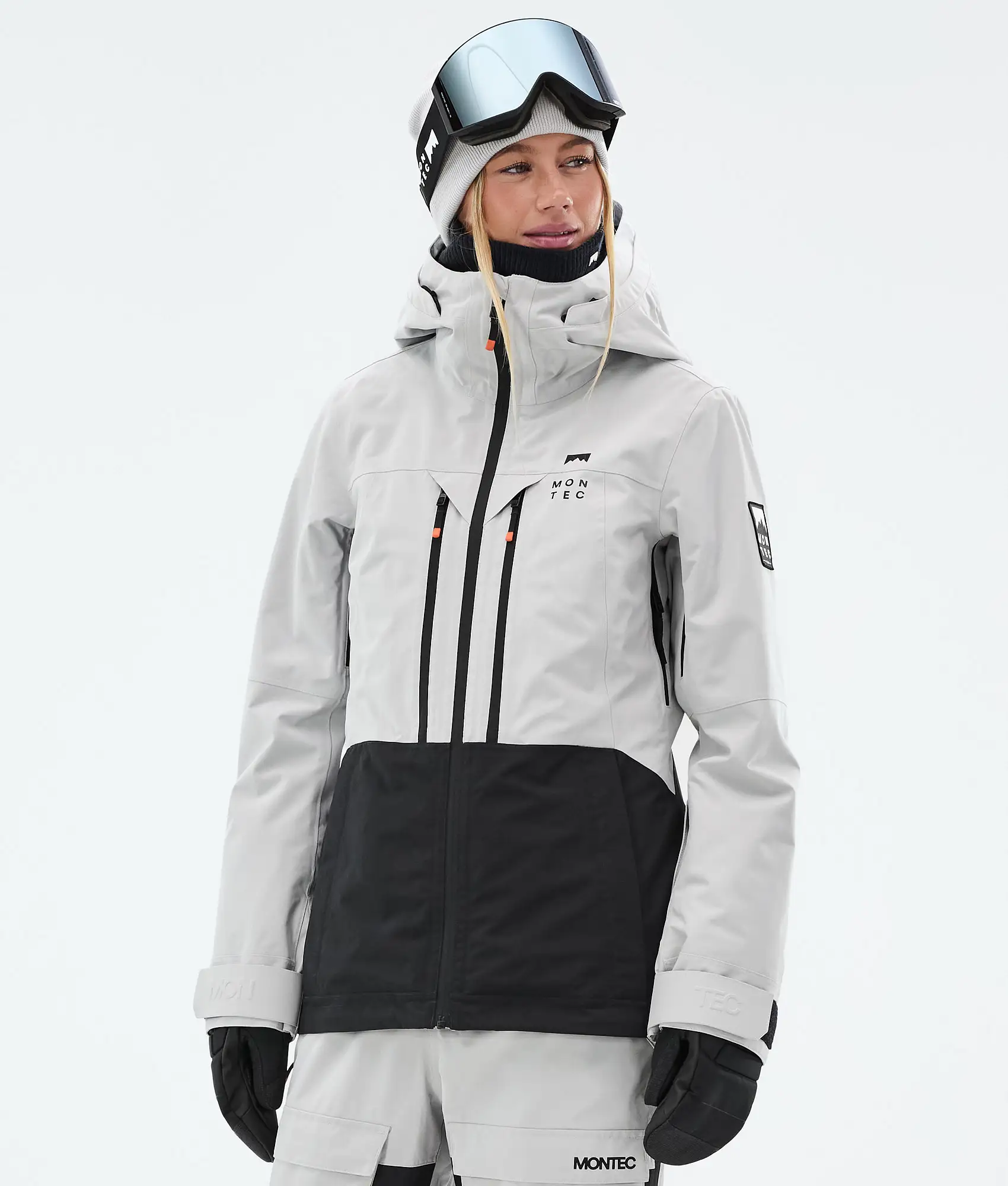
Montec Moss W: women’s, the value benchmark
The Moss W carries the same 20,000mm membrane and PFAS-free DWR as the Doom, with bluesign-approved fabrics and recycled shell and insulation, and a women’s-specific cropped shape rather than a scaled-down unisex pattern. The feature list runs unusually deep for the price band: underarm vents, snow skirt, ski-pass pocket, media pocket, stretch wrist gaiters, oversized gusseted cuffs, drawcord hem, microfleece chin guard.
The cropped cut is the main reason to look at it. InTheSnow’s review of the Moss W picks out the flattering cropped fit, the helmet-compatible storm guard hood, and the way the jacket pairs cleanly with high-waist pants. The 20K waterproofing, bluesign-approved fabrics, and PFAS-free DWR put it in conversation with much more expensive resort jackets on headline spec.
RRP £200. See the Moss W in Light Grey/Black.
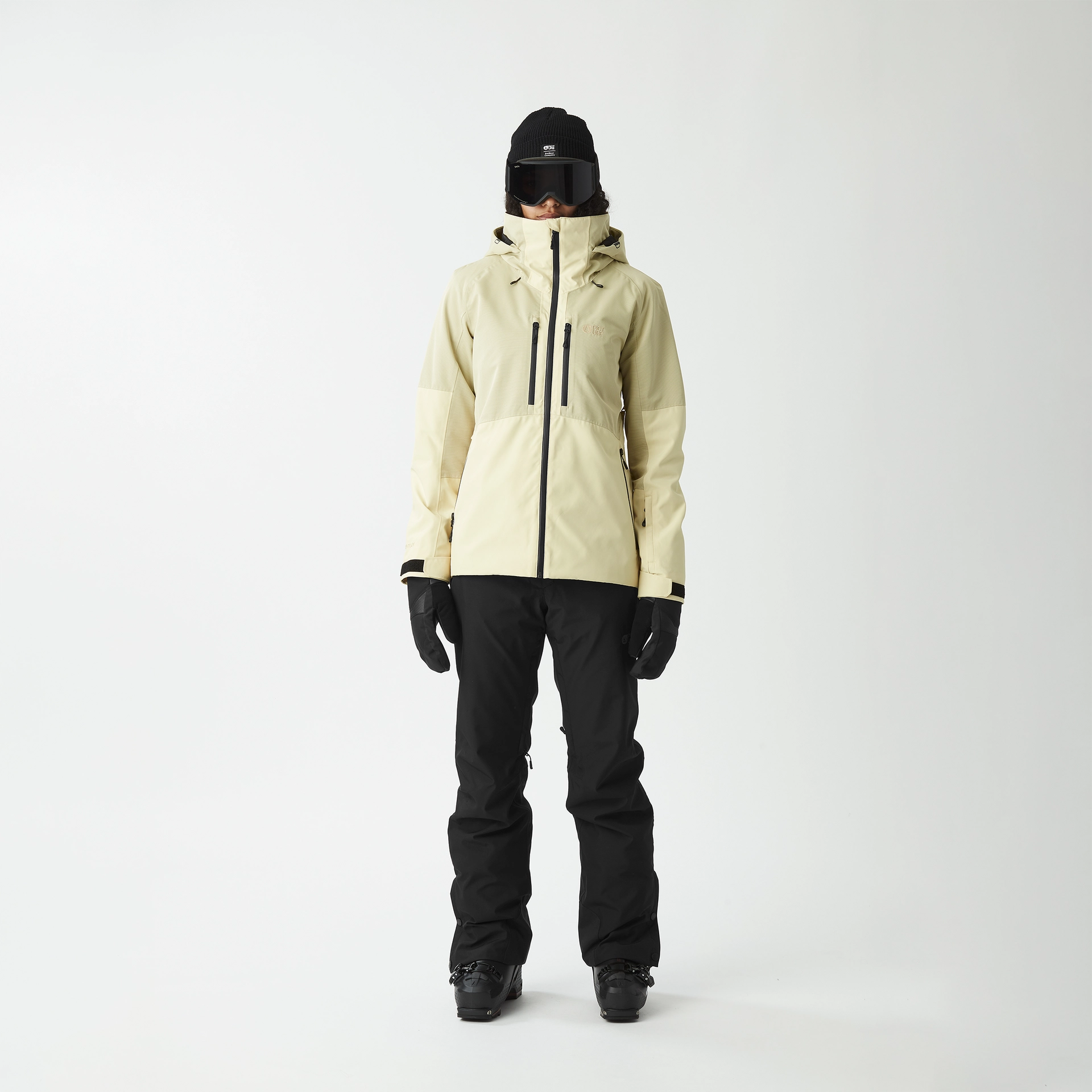
Picture Sygna: women’s, sustainable mid-premium
The Sygna sits squarely in the mid-premium tier on spec: a Dryplay 20K/20K membrane, 100% Circular Polyester Mini Reps Solid shell, fully taped seams, YKK waterproof zippers, pit zips, a three-point adjustable hood, an elasticated snow skirt, and a Teflon Ecoelite PFC-free DWR. The numbers put it in the same league as everything else at this price; the materials are what set it apart. Bluesign-approved fabrics on roughly 90% of the brand’s range, sitting under Picture’s wider B Corp framework, and on this jacket a circular-polyester shell rather than a virgin-petrochemical one.
RRP is listed around £360, with UK retail pricing varying by stockist and colourway. If sustainability matters to you, this is one of the more credible places to land.
See the Sygna at Picture Organic. More on the brand in our Picture Organic profile.
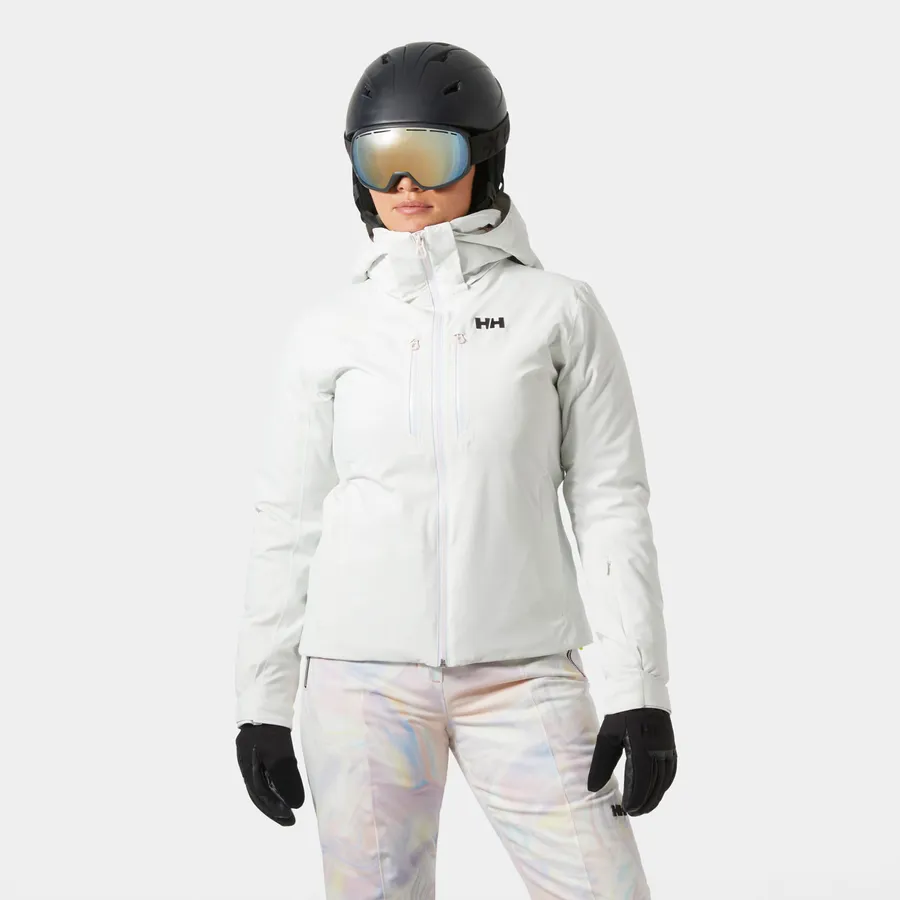
Helly Hansen Alphelia LIFALOFT: women’s, the heritage pick
The Alphelia LIFALOFT pairs a HELLY TECH Professional membrane with LIFALOFT insulation, cut on a women’s-specific pattern rather than scaled down from the men’s range. The feature set is all present and properly engineered: adjustable powder skirt, ski-pass pocket, RECCO reflector, helmet-compatible detachable hood, and a Life Pocket+ insulated phone pocket. Helly Hansen has been making technical outerwear since 1877 and has supplied multiple national alpine programmes over the years, with the consumer line drawing on the same proprietary membrane systems.
The cut sits on the slim and short side, which works for a clean line over a base and mid-layer but can feel restrictive over heavier insulation, and the shorter hem will ride up at full arm extension. The LIFALOFT insulation does the warmth-to-weight job well, which makes this a better fit for January and February ski weeks in genuinely cold conditions than for spring days when you are working hard on the snow.
RRP £480. See the Alphelia LIFALOFT at Helly Hansen UK. Brand background in our Helly Hansen profile.
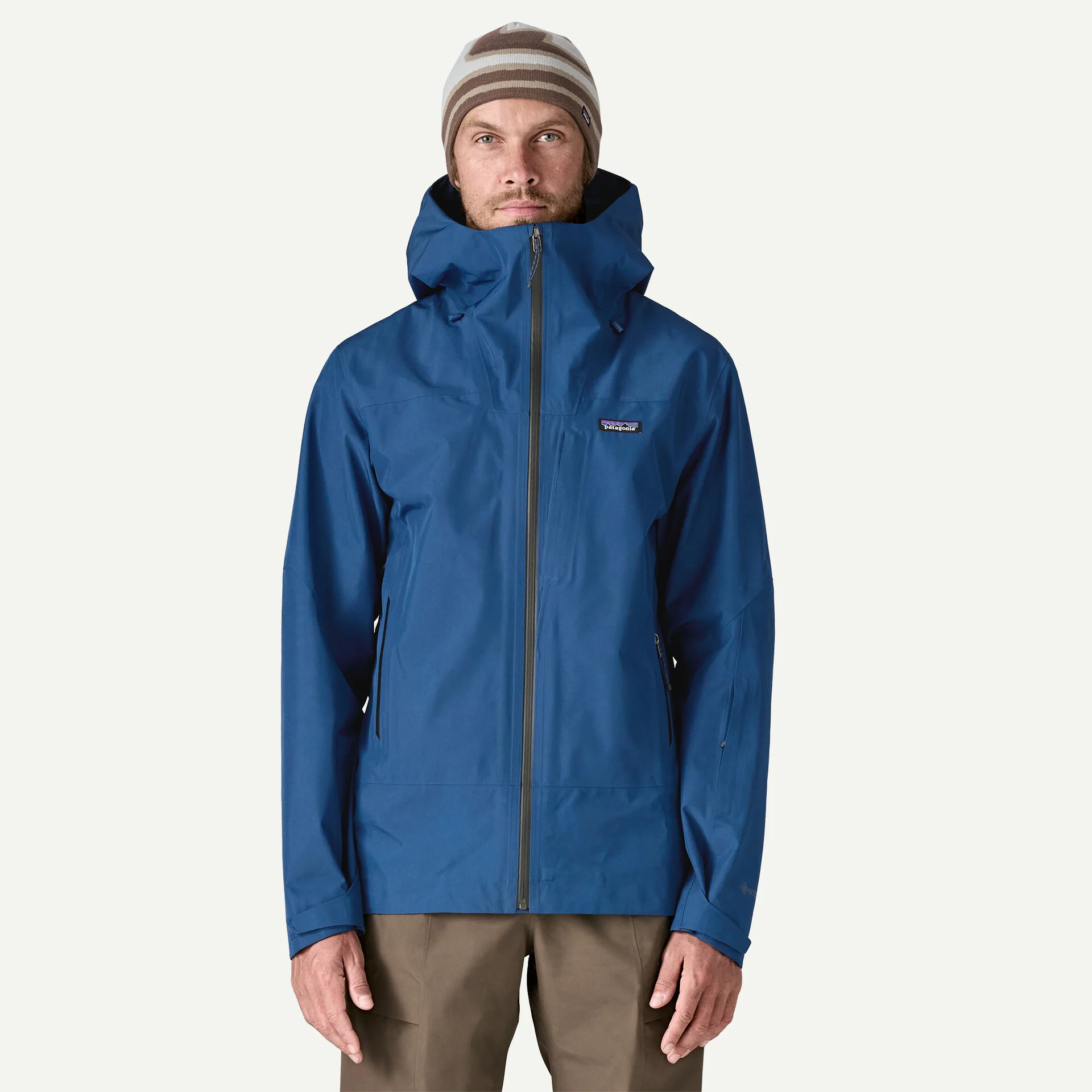
Patagonia Storm Shift: men’s, premium
The Storm Shift is a 2-layer GORE-TEX ePE shell with fully sealed seams and a 100% recycled polyester face fabric. Patagonia says the fabric, membrane and DWR finish are all made without intentionally added PFAS, and the jacket is Fair Trade Certified. The body-mapped zigzag fleece liner adds a small measure of warmth without the bulk of an insulated jacket. Patagonia lists it as regular fit, but the cut has enough room for proper ski layering.
Switchback Travel’s review of the Storm Shift is positive on weather protection, build quality, and long-term durability. That is where the premium-shell price tag has to earn its keep, before the GORE-TEX or Fair Trade arguments are made. It is a shell, not an insulated jacket, so warmth comes from base and mid layers underneath.
RRP £450, though Patagonia UK’s live pricing varies by colourway and size across the season. See the Storm Shift.
Resort vs all-mountain
Resort outerwear is tuned for the lift-and-piste reality: insulated linings, longer cuts, features built around the time you actually spend on lifts at altitude in places like the higher reaches of the Three Valleys. The Moss W and the Helly Hansen Alphelia LIFALOFT live there.
An all-mountain jacket inverts the priorities. It tends to be a shell with the warmth coming from mid layers that adjust to conditions and exertion. The Patagonia Storm Shift is the clearest all-mountain pick on this list, and the Doom in shell variant works the same way at a lower price.
For most UK skiers doing five to fifteen days a year, the insulated resort-leaning jacket is the right starting point. The shell becomes the right choice for skiers who venture off-piste regularly or who run hot enough that insulated outerwear feels like overkill across a full week in resort.
How to narrow it down
Four considerations tend to close the choice faster than a spec-sheet comparison. Where and at what altitude you ski matters first: a buyer heading for lower Austrian resorts in February is not solving the same problem as someone going to Tignes in January, and the jacket that works for one will overheat or underperform for the other. Days on snow per season matters second, because five days does not justify a £450 shell and a high day-count will pull more out of an entry-level jacket than the price band can really give back. The choice between a bib and a regular pant matters third, since a cropped or hip-length cut sits cleanly above a bib waistband whereas a longer parka fights it (the Moss W is cut for the former). Priority among warmth, weight, sustainability, and brand provenance matters fourth, all four are valid, and ranking them is what clarifies which tier you should be buying in.
More detail in our ski jacket buying guide and the base layers guide that pairs with it.
A few common questions
Do I need a ski-specific jacket, or will a hard-shell mountain jacket do? A general hard shell will keep you dry on the lift but it lacks the ski-specific features that matter once you are actually skiing: powder skirt, ski-pass pocket, helmet-compatible hood, and an articulated cut built for the movement pattern. For occasional resort days a general shell is fine, but anyone skiing regularly will feel where a ski-specific jacket earns the difference.
Insulated or shell? Insulated is warmer and simpler. Shell needs base and mid layers underneath but adapts better across temperature ranges. For a UK skier doing one Alps trip a year of mixed conditions, a shell with proper layering tends to be the more versatile choice.
Is 20,000mm waterproofing overkill? For most resort conditions, 10,000mm is technically enough. The 20,000mm rating becomes meaningful in heavy precipitation, sustained off-piste days, or a lot of time on wet lift chairs. Given that 20K is now baseline at the mid tier and above, it is rarely worth trading down.
Sustainability claims, how seriously to take them? They vary in credibility. The strongest signal is third-party certification (bluesign, GRS, Oeko-Tex, B Corp) rather than brand-marketing copy. Picture Organic and Patagonia have the clearest credentials on this list; the Moss W carries bluesign and recycled fabrics.
Verdict
For the once-a-season skier whose snow time is a club week plus a handful of dry-slope sessions, the Decathlon Wedze 500 Warm covers the weather without overspending. The waterproofing rating is the obvious trade-off, but at a low day-count it keeps the rain off, the layering options open underneath, and the budget free for the rest of the trip.
For the regular recreational skier on ten-plus days a year, or the club skier in free-ski and training mode away from the gates, the Montec Doom (men’s) or Moss W (women’s) move the value tier into proper second-jacket territory. The construction quality handles the volume of use, the layering load works under a heavier mid-layer for cold start-area mornings, and the price keeps the per-season cost in check across that climb.
For the sustainability-led buyer who wants a credible technical spec without the heritage-brand mark-up, the Picture Sygna is the most defensible pick on the list. The credentials are real rather than marketing varnish (B Corp, bluesign-approved fabrics, recycled and bio-sourced shell), and the regular UK retail discounting brings the price closer to the value tier than the spec sheet suggests.
For the buyer who wants proper insulation for cold-weather resort skiing or for whole days spent at the side of a course in variable weather, the Helly Hansen Alphelia LIFALOFT is the obvious heritage-brand choice. The trade-off is weight and a tendency to run warm during high-output skiing, which makes it a better fit for January and February ski weeks than for spring days when you are working hard on the snow.
For the buyer at the premium-shell end who wants the GORE-TEX ePE construction, the Fair Trade Certified manufacture, and the layering versatility that suits genuinely variable Alpine weather across a full week, the Patagonia Storm Shift is the safer call than most of what sits at this price. The Worn Wear repair programme is more visible than most rivals’, which nudges per-season cost in favour of the long-ownership user, though the value argument ultimately depends on care, fit, and how many days the jacket actually sees on snow.